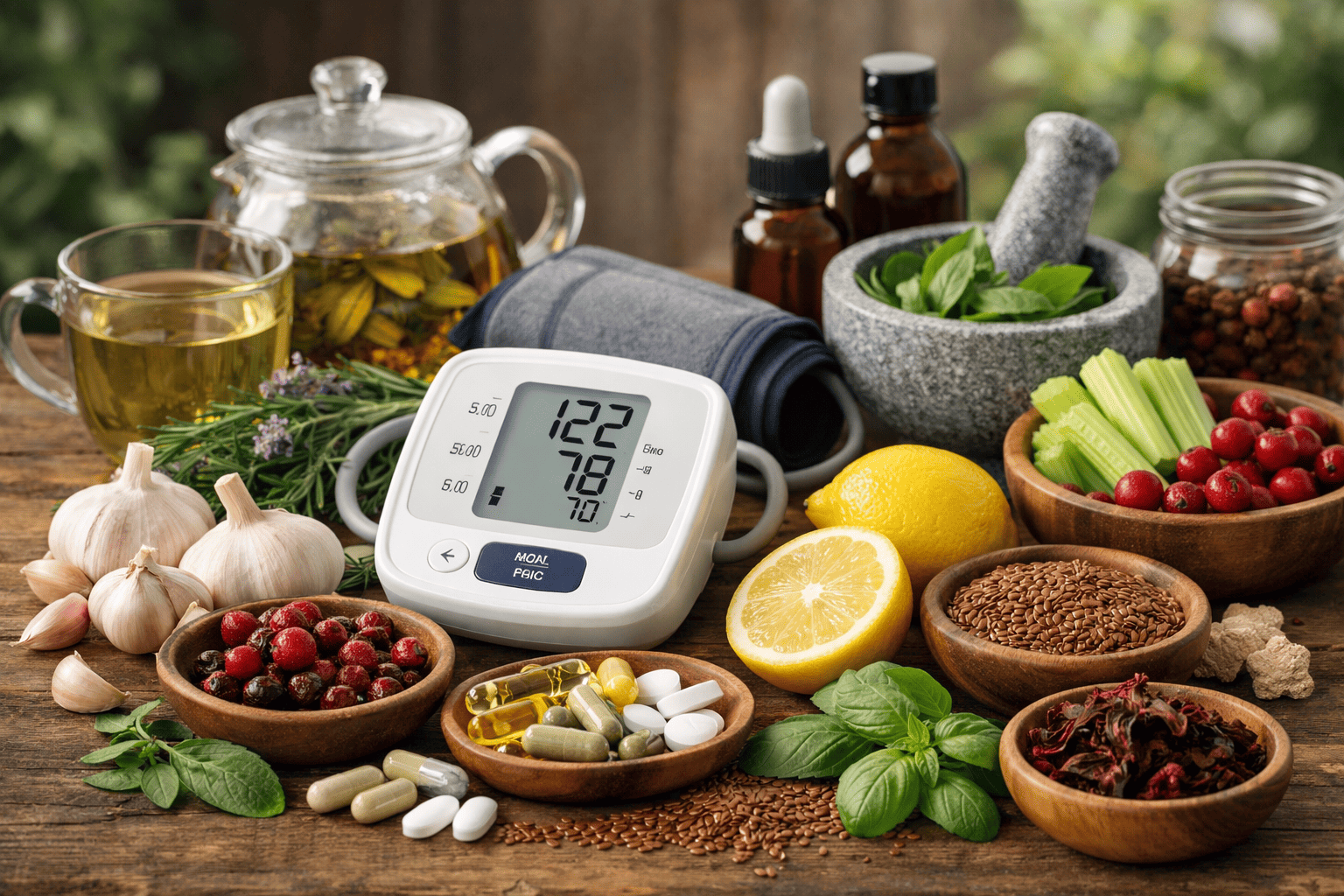
Зміст
Blood pressure herbs are a common search because many people want “natural” options alongside lifestyle changes. You’ll also see phrases like herbal supplements for high blood pressure across blogs and product pages. This guide focuses on what human studies suggest, how big the effects tend to be, and how to use herbs safely without replacing proven care.
What should beginners do before trying herbs?
Start with the biggest levers first. Modern guidelines emphasize lifestyle changes for all adults with elevated BP or hypertension: healthy weight, DASH-style eating, sodium reduction, adequate potassium from foods, physical activity, stress management, and limiting alcohol.
Herbs may be considered adjunct support, not a replacement.
Which blood pressure herbs have the best human evidence?
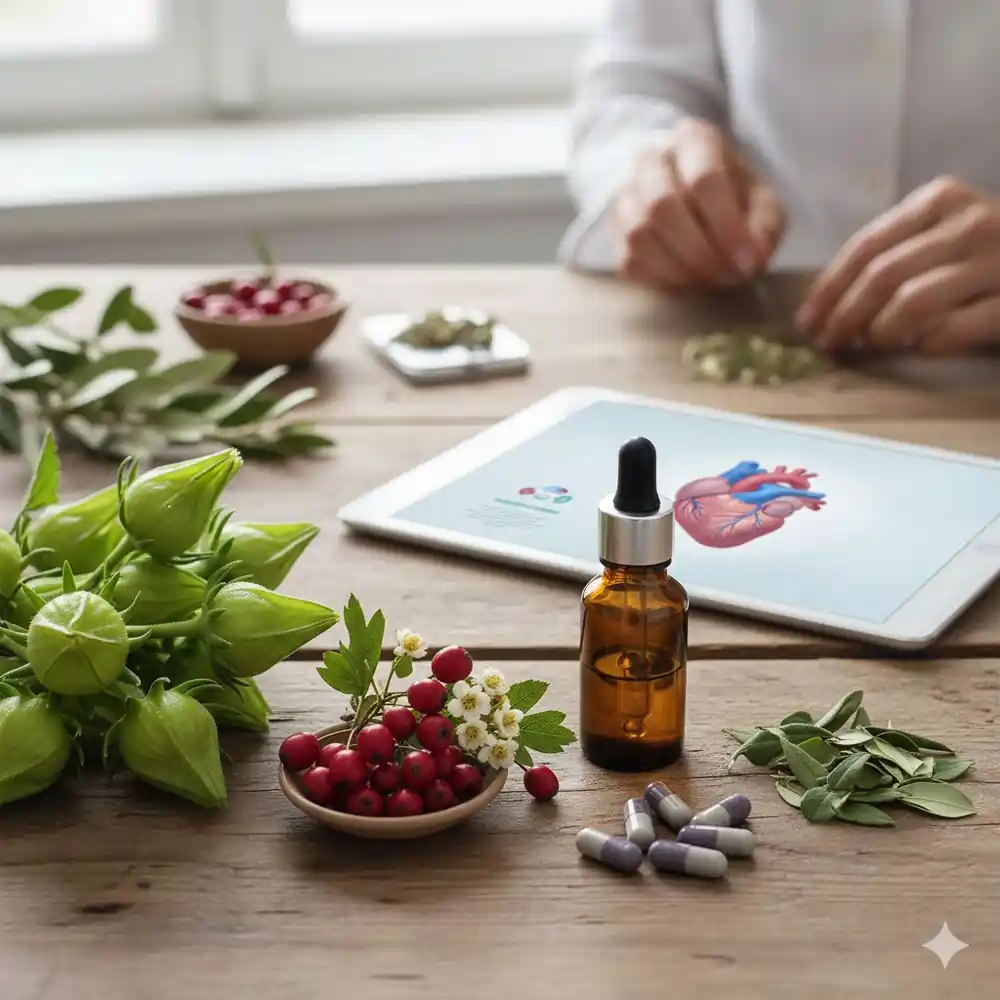
Below are herbs/spices with human clinical trial and meta-analysis data suggesting modest BP improvements in some populations. Effects vary by dose, product, baseline BP, and study quality.
Hibiscus (Hibiscus sabdariffa)
Hibiscus tea/extract is among the most studied “BP herbs.” A systematic review and meta-analysis (Nutrition Reviews, 2022) evaluated hibiscus effects on blood pressure and cardiometabolic markers (DOI 10.1093/nutrit/nuab104).
How to think about it: Results tend to be modest, and products vary (tea vs extract). Hibiscus can also interact with some medications in certain contexts.
Garlic (Allium sativum)
Garlic supplementation has multiple meta-analyses. For example, a meta-analysis in The Journal of Clinical Hypertension (2015) reported reductions in BP, especially in hypertensive participants (open-access full text available).
A newer systematic review/meta-analysis on longer-term garlic interventions was published in 2025 (Frontiers in Nutrition).
Safety note: Garlic can increase bleeding risk in some people, especially with anticoagulants/antiplatelets or before surgery.
Ginger (Zingiber officinale)
A systematic review and meta-analysis of clinical trials (2019) examined ginger supplementation and BP (Phytotherapy Research; DOI 10.1002/ptr.6362).
Pattern: Effects are often more noticeable in certain subgroups (dose, age, duration), and heterogeneity is common.
Cinnamon (Cinnamomum spp.)
Meta-analyses suggest cinnamon may improve BP modestly, though studies often involve people with metabolic risk (e.g., type 2 diabetes) and vary by cinnamon type and dose.
Safety note: Cassia cinnamon contains more coumarin, which can be a concern at high supplemental intakes for liver health; food-use is generally safer.
Olive leaf extract (Olea europaea leaf)
Systematic reviews/meta-analyses have assessed olive leaf extract and cardiometabolic outcomes in prehypertensive and hypertensive adults (2021–2022 era evidence).
A 2025 meta-analysis specifically on olive leaf extract and BP was also published (Phytotherapy Research).
Hawthorn (Crataegus spp.)
Hawthorn has traditional cardiovascular use. A systematic review (2020) reported BP-lowering potential in mild hypertension with longer use (example: ≥12 weeks), though more high-quality trials are still needed.
A 2025 meta-analysis on hawthorn and BP is also indexed in PubMed.
Table: evidence and “watch-outs” (beginner-friendly)
| Herb / botanical | Evidence strength (for BP support) | Typical theme in studies | Main cautions (examples) |
|---|---|---|---|
| Hibiscus | Moderate | Tea/extract may reduce BP modestly | Medication interactions possible; product variability |
| Garlic | Moderate | Stronger effects in people with higher baseline BP | Bleeding risk with anticoagulants/antiplatelets; GI upset |
| Ginger | Low–Moderate | Modest reductions in some trials/meta-analyses | Bleeding risk at high doses in some; heartburn |
| Cinnamon | Low–Moderate | Modest changes; mixed populations | Coumarin concern (Cassia) at high doses; interactions possible |
| Olive leaf extract | Low–Moderate | May support BP and lipids in some adults | Can lower BP; combine cautiously with BP meds |
| Hawthorn | Low–Moderate | Traditional cardio support; emerging synthesis | Can interact with cardiac meds; monitor BP |
“Evidence strength” here means supportive human data exists, not that results are guaranteed.
How big are herbal effects compared with lifestyle?
Herbs usually produce small-to-moderate average changes in trials. Lifestyle shifts often deliver larger, more reliable benefits and improve multiple risk factors at once.
Guidelines strongly recommend DASH-style eating and sodium reduction (and more), with a consistent evidence base across many studies.
Think of herbs as the “last 10–20% polish,” not the foundation.
What about “blood pressure herbs” that are popular but less proven?
You’ll see many other herbs promoted online (holy basil, turmeric/curcumin, cardamom, etc.). Some have early evidence or indirect pathways (inflammation, endothelial function), but fewer high-quality BP-focused meta-analyses. If you’re a beginner, start with options that have clearer human evidence and prioritize safety.
Safety rules that matter more than the herb itself
1) Avoid stacking multiple BP-lowering supplements
Combining several “BP herbs” can push BP too low or increase side effects—especially if you already take antihypertensives.
2) Watch for medication interactions
Common interaction categories:
- Anticoagulants/antiplatelets (bleeding risk): garlic, ginger, high-dose turmeric (caution varies).
- Blood pressure meds (additive lowering): hibiscus, olive leaf, hawthorn.
- Diabetes meds (glucose effects): cinnamon and others may modestly affect glucose markers in some studies.
3) Choose quality-controlled products
Look for third-party testing (USP, NSF, Informed Choice) and clear labeling. Avoid “proprietary blends” that hide doses.
Checklist: smarter way to try herbs
- Confirm your baseline with a validated home BP monitor and 7-day average (same time daily).
- Start lifestyle first: sodium reduction + DASH-style pattern + activity + sleep.
- Pick one herb with human evidence (hibiscus, garlic, ginger, cinnamon, olive leaf, hawthorn).
- Check interactions with your meds (especially blood thinners and BP meds).
- Start at the lowest label dose and hold for 2–4 weeks before changing anything.
- Track: BP average, dizziness, headaches, sleep, GI effects.
- Stop and seek care if you get alarming symptoms or very high readings.
Practical “how to use” without medical claims
Here are safe framing options that match compliant language:
- “May help support healthy blood pressure already within a normal range.”
- “May help maintain cardiovascular health alongside diet and activity.”
- “Supports overall heart-healthy routines.”
Blood pressure herbs | FAQ
1) Do blood pressure herbs replace medication?
No. Herbs may offer modest support, but guidelines prioritize lifestyle and—when needed—prescribed therapy. Do not stop medication without medical advice.
2) Which herb has the best evidence for BP support?
Hibiscus and garlic have some of the stronger meta-analysis support among commonly used options, though results vary by product and population.
3) How long does it take to see changes?
Some studies report changes within weeks, but a realistic approach is tracking a 2–4 week trend while keeping diet, sleep, and activity consistent.
4) What is the biggest safety risk with BP herbs?
Interactions with medications and additive BP lowering are the biggest issues. People on blood thinners or multiple prescriptions should be cautious.
5) When is high blood pressure an emergency?
If BP is over 180/120 and you have symptoms like chest pain, shortness of breath, weakness, vision changes, or trouble speaking, seek emergency help.
6) What should I do if herbs “don’t work”?
Re-check measurement technique, focus on sodium/DASH adherence, sleep, alcohol limits, and talk with a clinician about next steps.
Glossary (quick terms)
- SBP/DBP — systolic/diastolic blood pressure (top/bottom numbers).
- DASH — Dietary Approaches to Stop Hypertension eating pattern.
- Hypertension — consistently elevated BP; definitions vary by guideline and measurement method.
- Endothelium — inner lining of blood vessels; supports vascular tone.
- ACE inhibitor — medication class that lowers BP via renin–angiotensin system.
- Polyphenols — plant compounds (e.g., in hibiscus, olive leaf) studied for vascular signaling.
- Anthocyanins — pigments in some plants; more relevant to berries than classic “BP herbs.”
- Home BP monitoring — repeated at-home readings to reduce “white coat” effects and track trends.
Blood pressure herbs | Conclusion
Blood pressure herbs can be a reasonable supportive add-on, especially hibiscus, garlic, ginger, cinnamon, olive leaf, or hawthorn—if you use one at a time, monitor BP, and check interactions.
Sources & references
- WHO Hypertension fact sheet (Sep 25, 2025): www.who.int/news-room/fact-sheets/detail/hypertension
- AHA “When to call 911 for high blood pressure” (Aug 14, 2025): www.heart.org/…/when-to-call-911-for-high-blood-pressure
- 2025 AHA/ACC High Blood Pressure Guideline (AHA Journals, 2025): DOI 10.1161/HYP.0000000000000249
- Hibiscus meta-analysis (Nutrition Reviews, 2022): DOI 10.1093/nutrit/nuab104
- Garlic meta-analysis (J Clin Hypertens, 2015; full text): pmc.ncbi.nlm.nih.gov/articles/PMC8031974
- Garlic meta-analysis (Frontiers in Nutrition, 2025): www.frontiersin.org/…/10.3389/fnut.2025.1656809
- Ginger meta-analysis (Phytotherapy Research, 2019): DOI 10.1002/ptr.6362
- Cinnamon meta-analysis (Crit Rev Food Sci Nutr, 2020): DOI 10.1080/10408398.2019.1678012
- Cinnamon meta-analysis (systematic review/meta-analysis record): PubMed 32220351
- Olive leaf extract meta-analysis (Phytotherapy Research, 2022): PubMed 36271405
- Olive leaf extract meta-analysis (Phytotherapy Research, 2025): www.onlinelibrary.wiley.com/doi/10.1002/ptr.8509
- Hawthorn systematic review (2020, evidence summary): www.sciencedirect.com/…/S2212958817301106
- Hawthorn meta-analysis (2025): PubMed 40732315